

Have you ever seen “FMB” in a comment or message and wondered what it means? You’re not alone! Social media is full of short forms that can leave you guessing. FMB is one of them, and its meaning is easier to understand than you might think. It usually stands for “Follow Me Back,” a quick way to ask someone to return a social media follow. You may spot it on Instagram, TikTok, Snapchat, or other platforms.
So, what does fmb mean in text when someone sends it to you? In most cases, they’re asking you to follow their account after they’ve followed yours. You can say yes, check out their profile, or simply ignore the request if you’re not interested. There’s no pressure to follow everyone back! Let’s look at how people use FMB, what similar abbreviations mean, and how you can reply with confidence.
Meaning & Definition
FMB is a popular texting abbreviation that stands for “Follow Me Back.” People use it on social media when they want someone to follow their account in return.
The phrase is a simple request for a mutual follow. It helps users connect with others without typing a long message.
In digital communication, FMB is a form of social media slang. You might see it in comments, captions, bios, or DMs (direct messages).
People often use it to grow followers, improve visibility, and build their online presence.
Common uses of FMB include:
- Asking someone to follow your Instagram or TikTok account.
- Requesting mutual engagement after following another person.
- Connecting with new audiences through social media posts.
- Encouraging friends to support a new account.
Example conversation:
- Alex: “Hey, I just followed your account!”
- Sam: “Thanks! FMB 😊”
Remember that FMB is informal. You should avoid it in business emails and formal writing.
What Does FMB Mean in Text?
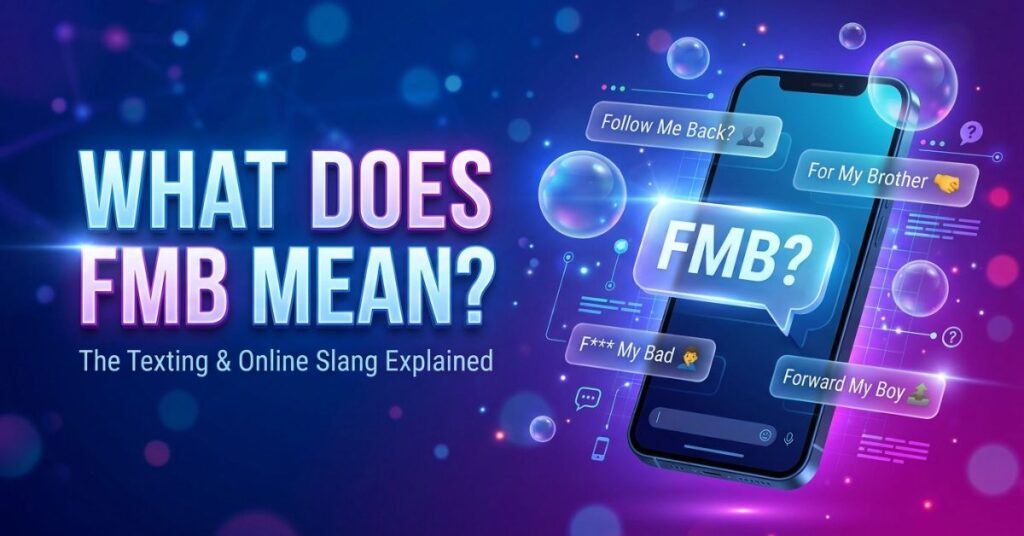
If you’re wondering what does fmb mean in text, the answer is usually “Follow Me Back.” Someone uses this abbreviation to ask you to follow their social media account after they follow yours.
The meaning depends on the tone and context of the conversation. However, when FMB appears beside a username or social media profile, it usually refers to a follow-back request.
Here are some common situations where you’ll see FMB:
- In comments beneath Instagram or TikTok posts.
- In DMs when someone wants to connect.
- In bios where users invite others to follow them.
- In chats with friends who share new social media accounts.
Example conversation:
- Mia: “I followed you on Instagram. FMB?”
- Jake: “Sure! I’ll check out your profile.”
FMB is different from common texting abbreviations like LOL and BRB. Those express laughter or a short absence, while FMB requests a specific action.
You don’t have to follow someone back if you don’t want to. It’s simply a request, not an obligation.
Background / Origin
The origin of FMB connects to the growth of social media platforms and online networking. As following other accounts became a common feature, users started shortening “Follow Me Back” to save time.
This texting abbreviation fits the fast digital world, where short messages help people communicate quickly. Like other forms of text slang, FMB makes casual online conversations shorter and more direct.
People may use it when they want to grow their account, gain followers, or build connections with new audiences. However, its use can vary between communities and platforms.
FMB became useful for several reasons:
- It saves time when sending quick messages.
- It encourages mutual follows between users.
- It helps people ask for support without writing long sentences.
- It reflects the role of engagement in social media culture.
Example conversation:
- Ryan: “New account! Follow me and FMB 💯”
- Chris: “I’ll take a look at your posts.”
Unlike older abbreviations such as LOL and BRB, FMB focuses on social media connections. Its exact history and earliest use aren’t clearly established.
Usage in Different Contexts
FMB mainly appears in casual online conversations. People use it to request a follow back after connecting with another account.
On Instagram, someone might comment “FMB” beneath a post. On TikTok, a user might include it in a caption to encourage others to visit their profile.
The abbreviation is informal and works best in relaxed conversations. It isn’t suitable for professional communication, business emails, or formal writing.
Common situations include:
- With friends: Asking someone to follow your new account.
- In comments: Requesting a follow back from another user.
- In DMs: Connecting with someone who shares your interests.
- For networking: Encouraging mutual engagement with new audiences.
Example conversation:
- Ava: “I followed your photography page. FMB?”
- Noah: “Thanks for the follow! I’ll check it out.”
However, overusing FMB can make your messages feel spammy or impersonal. Genuine interaction often works better than repeatedly asking strangers to follow you.
FMB Meaning on Social Media Platforms
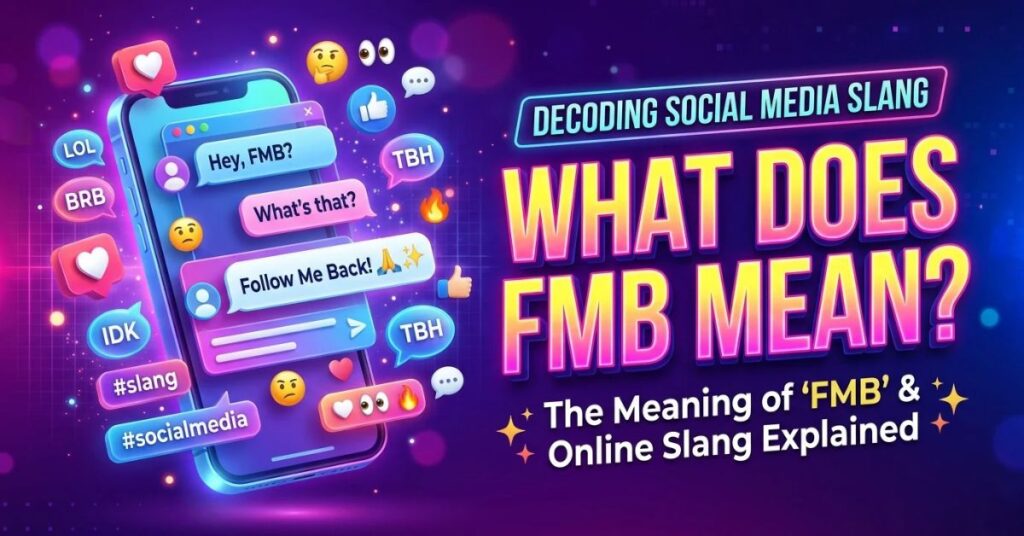
The FMB meaning in text generally stays the same across social media platforms: “Follow Me Back.” However, the way people use it depends on each platform’s features and community habits.
You may encounter FMB in comments, posts, bios, captions, or direct messages. It usually signals a request for mutual follows rather than a guarantee of future engagement.
Here’s how FMB may appear on different platforms:
- Instagram: Someone may comment “FMB” or send it through DMs after following your account.
- TikTok: Users may include FMB in captions or comments to request reciprocal follows.
- Snapchat: Someone might use it when sharing a social profile or asking for a connection.
- WhatsApp: Friends may use FMB in chats when exchanging social media usernames.
- Twitter (X): Users may request follow backs through posts or direct messages.
- LinkedIn: FMB is less suitable because professional networking usually favors clear, personalized requests.
Example conversation:
- Lily: “Found your TikTok! FMB 😊”
- Emma: “Thanks! I’ll check out your videos.”
FMB can also appear when people share profiles on dating apps. In gaming conversations, its meaning may vary, so check the context before assuming it means “Follow Me Back.”
Other Meanings in Different Fields
FMB usually means “Follow Me Back” in social media slang. However, abbreviations can have different meanings depending on the conversation or industry.
If you’re wondering what does fmb mean in text, check where the abbreviation appears. A message about Instagram probably refers to following someone back.
In other fields, FMB may represent an organization, technical term, or internal label. Its meaning depends on the source.
Here are a few things to consider:
- Social media: Follow Me Back is the common informal meaning.
- Technology: FMB might appear as an internal file name or project abbreviation.
- Medical settings: Clinical abbreviations vary, so don’t assume FMB means “Fetal Movement Baseline” without a reliable source.
- Physics: FMB has no single widely recognized meaning across the entire field.
Example conversation:
- Alex: “Someone commented FMB on my post.”
- Mia: “They probably want you to follow them back.”
Always consider the topic before deciding what FMB means.
Examples of FMB in Sentences
Seeing FMB in real conversations makes its meaning easier to understand. People generally use this texting abbreviation when they want a reciprocal follow on social media.
It often appears in direct messages, comments, captions, and casual chats. The tone is usually friendly, although some users may use it to grow followers quickly.
Here are some examples of how people use FMB in everyday conversations.
- Instagram: “I followed your account. FMB 😊”
- TikTok: “New creator here! FMB if you like my videos.”
- Snapchat: “Added you today. FMB?”
- WhatsApp: “Here’s my new Instagram username. FMB!”
- Comment section: “Love your pictures! FMB 💯”
- Casual chat: “I followed your page, so don’t forget FMB.”
Example conversation:
- Ryan: “I just followed your photography account.”
- Emma: “Thanks! I’ll check out your profile and follow back.”
These examples show the usual FMB meaning in text. However, the abbreviation doesn’t guarantee that someone will return the follow.
Common Misconceptions
FMB looks simple, but people sometimes misunderstand how it works. Its meaning can depend on the platform and the surrounding message.
The most common interpretation is “Follow Me Back.” Still, not every use of FMB automatically refers to social media.
Here are some common misconceptions:
- FMB always has one meaning: Its meaning can change in technical or specialized conversations.
- Following back is compulsory: Nobody has to follow an account just because someone asks.
- FMB guarantees engagement: A mutual follow doesn’t promise likes, comments, or regular interaction.
- FMB is professional language: It’s informal social media slang, not a standard business expression.
- Every FMB request is genuine: Some accounts use follow-back requests mainly to increase their numbers.
Example conversation:
- Noah: “They followed me, so I have to follow them back?”
- Ava: “No. You can decide whether their content interests you.”
If you search what does fmb mean in text, remember that context matters. Genuine connections are more valuable than follower counts alone.
Similar Terms & Alternatives
Several social media abbreviations have meanings similar to FMB. They often appear in comments, bios, captions, and direct messages.
However, each term communicates a slightly different request. Understanding these differences helps you avoid confusion during casual online conversations.
Here are some related terms:
- FB (Follow Back): A shorter way to request or describe returning a follow.
- F4F (Follow for Follow): An agreement where two users follow each other’s accounts.
- Mutuals: People who follow each other on a social media platform.
- Connect: A general request to build a connection, especially on professional networks.
- Support me: A broader request for help through follows, likes, shares, or comments.
- LOL: Means “Laughing Out Loud” and expresses amusement.
- BRB: Means “Be Right Back” and signals a short absence.
Example conversation:
- Liam: “F4F? I just followed you.”
- Zoe: “Sure, I’ll check out your account.”
Unlike LOL and BRB, FMB asks for a specific action. If you’re learning text slang, remember that similar abbreviations don’t always mean the same thing.
How to Respond to FMB When Someone Uses It
Your response to FMB depends on whether you want to follow the person back. You can reply politely without making a commitment.
If someone sends FMB after following your account, they probably want you to visit their profile and return the follow.
Here are a few natural responses:
- If you’re happy to follow back: “Sure! Thanks for the follow 😊”
- If you want to check their content first: “Thanks! I’ll check out your profile.”
- If you’ve already followed them: “Already following you! 💯”
- If you’re unsure: “Thanks for connecting. I’ll take a look.”
- If you don’t want to follow back: “Thanks for following! I usually follow accounts that match my interests.”
- If you want clarification: “Do you mean follow me back?”
Example conversation:
- Sam: “Just followed you on Instagram. FMB?”
- Lily: “Thanks! I’ll check out your page.”
You don’t need to follow someone simply because they asked. Choose a response that feels comfortable and genuine.
Difference Between FMB and Similar Terms
FMB, FB, and F4F all relate to social media follows. However, they don’t communicate exactly the same thing.
Knowing the difference helps you understand what someone expects during an online conversation.
| Term | Full form | Main purpose |
| FMB | Follow Me Back | Requests a return follow |
| FB | Follow Back | Refers to returning a follow or requests it |
| F4F | Follow for Follow | Suggests an exchange of follows |
| Mutuals | Mutual followers | Describes users who follow each other |
| Connect | No fixed full form | Requests a broader connection |
FMB usually focuses on a direct request. F4F often suggests an exchange where both users agree to follow each other.
Example conversation:
- Alex: “FMB, please!”
- Jordan: “Do you mean follow for follow?”
- Alex: “Yes, I’ll follow your account too.”
When asking what does fmb mean in text, remember that it generally means “Follow Me Back.” The other terms are related but have different uses.
Relevance in Online Conversations & Dating Apps
FMB is part of social media culture, where people often use short phrases to communicate quickly. It can help users request mutual follows and connect with new audiences.
You may see it on Instagram, TikTok, Snapchat, or Twitter (X). Some users include it in comments, bios, or direct messages to grow followers and increase profile visibility.
On dating apps, the meaning depends more on context. Someone might use FMB when asking you to follow their Instagram account outside the dating platform.
People may use FMB to:
- Build connections with other users.
- Grow an account or increase followers.
- Encourage mutual engagement.
- Share profiles with people who have similar interests.
- Expand their online presence.
Example conversation:
- Mia: “I enjoyed chatting with you. Here’s my Instagram. FMB 😊”
- Noah: “Thanks! I’ll check out your profile.”
Still, a follow-back request doesn’t prove romantic interest or genuine friendship. If a message feels spammy or pushy, you can ignore it.
FMB works best in casual conversations. For meaningful networking or dating connections, personalized messages usually feel more genuine.
Conclusion
FMB usually means “Follow Me Back” in text messages and social media conversations. People use it to ask for a return follow on Instagram, TikTok, Snapchat, and other platforms. If you’ve wondered what does fmb mean in text, remember that context matters. The meaning is usually clear when someone mentions a profile or account. However, other meanings may appear in different situations. Understanding the conversation helps you avoid confusion.
Now that you know what does fmb mean in text, responding becomes much easier. You can follow someone back if you like their content. You can also reply politely or ignore the request. FMB is casual text slang, so avoid using it in formal emails or professional messages. Knowing what does fmb mean in text helps you understand online conversations with confidence. Keep your replies natural and focus on genuine connections rather than follower numbers. After all, real engagement matters more than a high follower count.
FAQ’s
What does FMB mean in text?
FMB usually means Follow Me Back. If you wonder what does fmb mean in text, it requests a reciprocal social media follow.
What does FMB mean on Instagram?
On Instagram, FMB means Follow Me Back. Users write it in comments or DMs to request a follow in return.
Is FMB the same as F4F?
No, FMB requests a follow back, while F4F means Follow for Follow. Both encourage mutual follows on social media.
How should you respond to FMB?
You can follow back, check the person’s profile, or politely decline. Understanding what does fmb mean in text helps you respond confidently.
Is FMB appropriate for professional communication?
FMB is informal social media slang. Avoid it in business emails and formal writing. Use clear, professional language when networking.
Meta Description
Learn what does fmb mean in text, how to use it on social media, common examples, similar slang terms, and the best ways to reply in 2026.
