

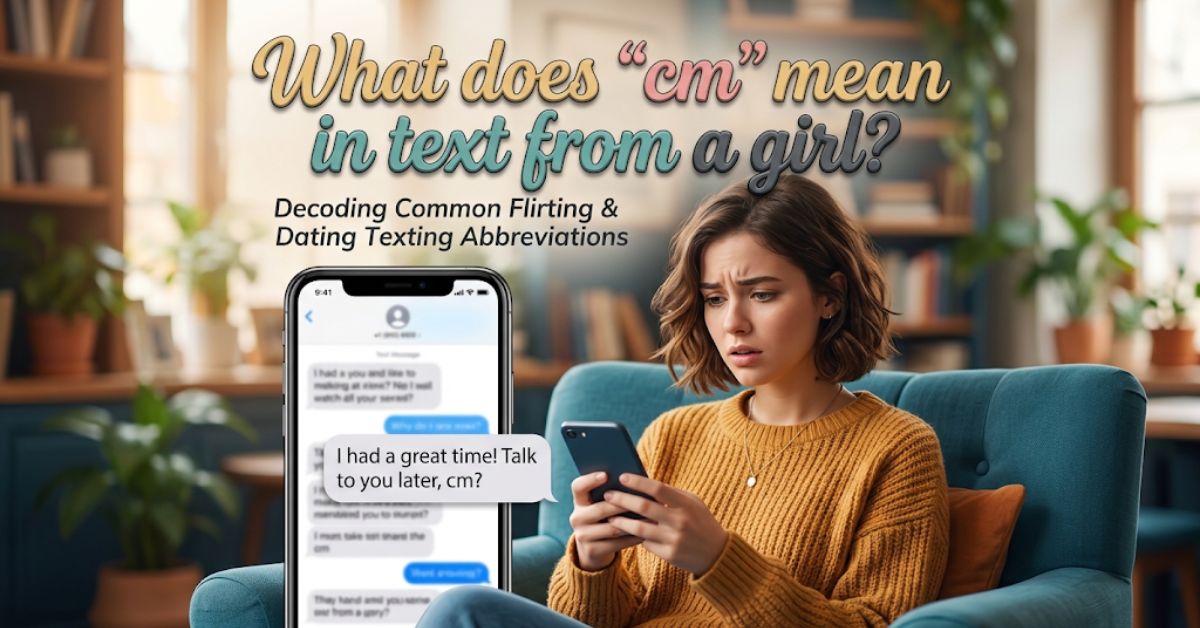
Ever received a text saying CM and wondered if it was a request, a secret code, or something completely different? A simple two-letter abbreviation can leave you guessing when its meaning changes with the conversation. If you’re wondering what does cm mean in text, the most common interpretation is Call Me. Someone might send it when they want to hear your voice instead of exchanging endless messages.
But here’s where things get interesting: CM doesn’t have just one meaning. It can also stand for Centimeter, Community Manager, or even Cuddle Me in certain conversations. The meaning depends on who’s texting you and what you’re talking about. Whether you spotted CM in a WhatsApp message, a flirty chat, or a workplace discussion, understanding the context makes all the difference. Let’s break down each meaning with simple explanations and everyday examples.
What Do “CM” Mean In Text?
Have you ever received a message containing CM and wondered what the sender meant? You’re not alone. Short text abbreviations can leave you staring at your screen, especially when they have multiple meanings.
So, what does cm mean in text? The most common meaning highlighted in casual texting is Call Me. People use it when they want someone to contact them through a phone call instead of continuing to text.
However, CM doesn’t always mean the same thing. Its meaning depends on the conversation and the people involved.
Here are four possible meanings:
- Call Me: Asking someone to make a phone call.
- Centimeter: A unit used for measurement.
- Community Manager: A professional job role.
- Cuddle Me: An affectionate expression used in some close relationships.
Always consider the conversation context before choosing a meaning.
Simple Meaning: Breaking It Down For You
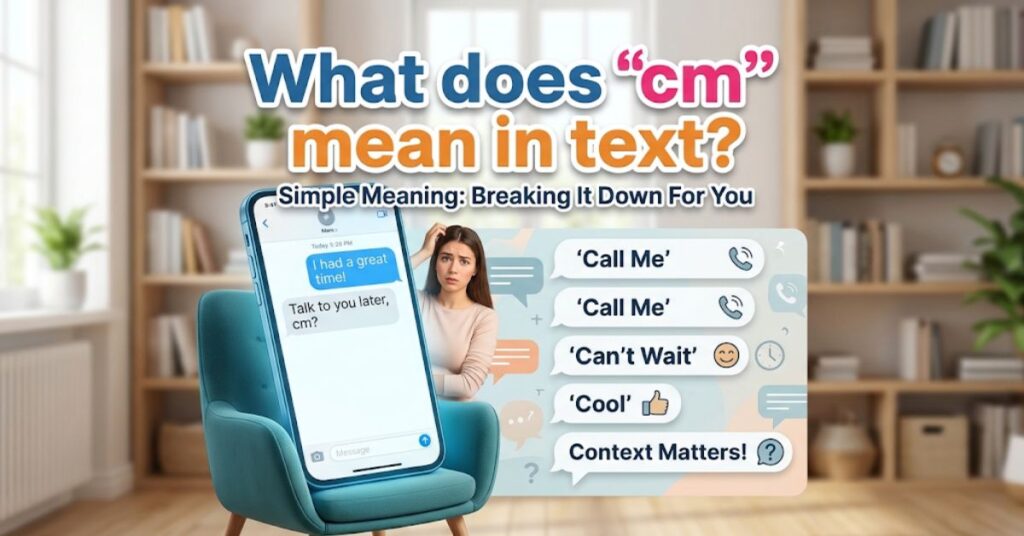
CM is a short abbreviation formed from the first letters of a phrase or term. People use this texting shorthand to communicate quickly without typing complete sentences.
In casual conversations, CM often means Call Me. For example, someone might send these two letters when they need to discuss something privately.
However, CM can represent other things in different situations. You might see it in measurement discussions, workplace chats, or flirty texts.
Here are its main interpretations:
- Call Me: A direct request for a phone conversation.
- Centimeter: A measurement used for height, length, and size.
- Community Manager: Someone responsible for managing an online community.
- Cuddle Me: A sweet expression that may appear in romantic texting.
Example conversation:
Friend: Something important happened today. CM when you’re free.
You: Sure! I’ll call you tonight.
Here, CM clearly means Call Me.
Where Is “CM” Used?
CM appears across different communication platforms and everyday situations. You’ll usually understand its meaning by looking at the surrounding words.
For example, a friend might use CM in an SMS message when requesting a phone call. Meanwhile, someone discussing product sizing might use it to describe centimeters.
Here are some common places where you might encounter it:
- SMS and iMessage: Friends may use CM to request a phone call.
- WhatsApp: People use it in quick messages and group conversations.
- Dating apps: CM may appear in flirty texts or affectionate conversations.
- Social media: Community Manager can describe someone’s professional job role.
- Slack and LinkedIn: Coworkers may use CM when discussing social media management.
- Discord and gaming chats: Its meaning depends on the particular conversation.
Example conversation:
Friend: Can’t explain everything here. CM later.
You: Okay, I’ll call after work.
The platform provides clues, but the conversation context matters most.
Why Do People Use “CM” Instead Of Typing It Out?
Typing a complete sentence isn’t always convenient. When someone needs a quick response, abbreviations make everyday communication easier.
CM saves typing time and keeps casual texting short. It’s especially useful when you’re multitasking or sending messages while handling other activities.
Here are some reasons people prefer this abbreviation:
- Saves time: Two letters take less effort than typing an entire phrase.
- Keeps messages short: It works well in quick conversations.
- Creates a casual tone: Friends and partners often prefer relaxed communication.
- Makes direct requests: CM quickly tells someone to make a phone call.
- Builds texting habits: Frequent messaging encourages people to use familiar shorthand.
Example conversation:
Friend: Busy rn. CM asap pls.
You: Okay, I’ll call when I get a minute.
However, abbreviations don’t always provide clarity. If someone doesn’t recognize CM, spelling out the phrase can prevent confusion.
Real-Life Examples Of “CM” In Texting (With Explanations)
The easiest way to understand CM is through everyday conversations. The same two letters can communicate different things depending on the situation.
For instance, a friend might use CM to request a phone call. Someone discussing product dimensions might use it as a measurement abbreviation.
Here are four realistic examples that show how its meaning changes.
Example 1: Asking Someone To Call
Imagine your friend has some exciting news but doesn’t want to explain everything through text messages. Instead, they send a quick request asking you to call.
Conversation example:
Friend: Hey, something crazy happened today. CM when you’re free!
You: Really? I’ll call you in ten minutes.
In this conversation, CM means Call Me. Your friend wants a proper phone conversation rather than a lengthy text exchange.
You might also encounter similar messages:
- CM later.
- CM when you get home.
- CM asap.
- Can’t explain here. CM pls.
This usage works well between close friends, family members, and coworkers who already communicate casually.
Example 2: Talking About Measurements
Not every CM message involves texting slang. Sometimes it simply represents centimeter, a standard unit of measurement.
You’ll commonly see this meaning in conversations about height, clothing sizes, product dimensions, and online shopping orders.
Conversation example:
Friend: How long is that package?
You: Around 30 cm. It should fit inside your bag.
Here, CM describes the package’s length. It has nothing to do with requesting a phone call.
Other examples include:
- My plant grew 5 cm this week.
- The table is 120 cm long.
- This dress needs another 2 cm around the waist.
When people discuss measurements, CM usually refers to centimeters. The surrounding numbers and sizing details make its meaning clear.
Example 3: Flirty Or Close Relationship Texting
CM can also appear in romantic texting and affectionate conversations. Depending on the relationship, someone might use it to mean Cuddle Me.
However, this interpretation isn’t universal. The sender’s tone and the conversation matter before assuming a romantic meaning.
Conversation example:
Partner: It’s getting cold tonight. CM? 🥺
You: Only if you promise to bring a warm blanket!
Here, CM could suggest Cuddle Me because the conversation has an affectionate tone.
You might encounter similar messages between couples:
- Wish you were here. CM.
- Long day today. CM please.
- Missing your hugs. CM tonight?
Remember that CM can still mean Call Me in romantic conversations. Don’t assume every affectionate message carries the same meaning.
Example 4: Work Or Professional Context
In workplace communication, CM can stand for Community Manager. This is a professional job title associated with managing online communities and social media interactions.
A Community Manager may handle audience engagement, respond to comments, manage online discussions, and support a brand’s digital presence.
Conversation example:
Coworker: Please ask the CM about the campaign approval.
You: Sure, I’ll contact the Community Manager this afternoon.
Here, CM refers to a person responsible for community management. It isn’t a request for a phone call.
You might also see it in:
- Slack workplace chats.
- LinkedIn conversations.
- Social media management discussions.
- Marketing team messages.
- Professional documents.
In these situations, the workplace topic helps you identify the intended job role.
“CM” vs Similar Texting Terms
CM isn’t the only abbreviation people use in everyday digital conversations. Several other texting terms help people communicate quickly without writing complete sentences.
However, these abbreviations don’t always carry the same meaning. Understanding their differences can help you avoid awkward mix-ups.
Here’s a simple comparison table:
| Abbreviation | Full Meaning | Common Use |
| CM | Call Me | Requesting a phone call |
| HMU | Hit Me Up | Asking someone to contact you |
| PM | Private Message | Sending a private message |
| DM | Direct Message | Contacting someone privately |
| CTC | Contact To Confirm | Business or scheduling communication |
| BRB | Be Right Back | Temporarily leaving a conversation |
Example conversations:
- Friend: HMU when you’re free.
- Friend: Send me a DM later.
- Coworker: PM me the updated report.
- Friend: BRB, someone is at the door.
- Friend: CM when you reach home.
Notice the difference? HMU invites someone to get in touch while CM can directly request a phone call.
Other abbreviations, such as IKRR and FW, also appear in casual texting. Their meanings depend on the conversation and shouldn’t be confused with CM.
When Should You Use “CM” In Texting?
CM works best when you’re communicating with someone who understands your texting habits. It’s a convenient abbreviation for casual conversations and quick requests.
However, not every situation calls for shorthand. A professional email or an important business message needs clear wording.
Good times to use CM:
- When asking close friends to make a phone call.
- When chatting casually with family members.
- When messaging your partner about an affectionate moment.
- When discussing measurements with people who understand the abbreviation.
- When using an established job title in workplace chats.
Times to avoid using CM:
- In formal emails or professional documents.
- When communicating with someone unfamiliar with texting slang.
- When discussing important orders or product measurements.
- When the intended meaning isn’t obvious.
Example conversation:
Friend: CM when you finish work.
You: Sure, I’ll call you later.
This sounds natural between friends. However, writing Please call me when you’re available works better in formal communication.
Common Misunderstandings About “CM”
Two-letter abbreviations can create confusion because they don’t always carry one fixed meaning. CM is a good example of this problem.
Someone might interpret it as Call Me while another person understands it as Centimeter. The wrong assumption can lead to awkward mix-ups.
Here are some common misunderstandings:
1. Assuming CM Always Means Call Me
Call Me is the primary casual texting interpretation in the competitor’s explanation. However, measurement and workplace conversations can suggest different meanings.
2. Confusing CM With Centimeter
When someone discusses height, length, or sizing, CM usually refers to centimeters rather than a phone call.
3. Missing the Romantic Context
In flirty texts, CM might suggest Cuddle Me. However, this meaning isn’t guaranteed without additional context.
4. Confusing It With a Professional Job Title
A coworker mentioning the CM might mean Community Manager. Pay attention to the workplace discussion.
5. Reading Too Much Into Short Messages
Not every abbreviation contains a hidden meaning. Sometimes the sender simply wants a quick phone conversation.
When you’re unsure, ask for clarification instead of guessing.
Pro Tips For Using (And Understanding) “CM” Like A Pro
Understanding CM becomes much easier when you pay attention to a few simple details. You don’t need complicated rules to interpret this texting abbreviation correctly.
Instead, consider the sender, the conversation topic, and the surrounding words.
Here are some practical tips:
- Check the conversation context: Measurement discussions usually point toward centimeters while casual chats may suggest Call Me.
- Consider the sender: A partner, close friend, and coworker may use CM differently.
- Look at surrounding words: Phrases like asap and pls can indicate a direct request.
- Notice the tone: Romantic texting may suggest an affectionate interpretation.
- Understand the platform: WhatsApp, iMessage, Slack, and Discord conversations can provide useful clues.
- Don’t assume hidden meanings: Short messages aren’t always complicated.
- Ask when confused: A simple question can prevent misunderstandings.
Example conversation:
Friend: CM when you get home.
You: Do you mean call you?
Friend: Yes! I need to tell you something.
See how easy that is? When the meaning isn’t clear, simply ask. It’s always better than sending the wrong message.
Conclusion
Understanding what does cm mean in text becomes easy when you look at the conversation. CM most commonly means Call Me in casual messages. However, it can also stand for Centimeter, Community Manager, or Cuddle Me. Each meaning fits a different situation. For example, a friend may use CM to request a phone call. Someone discussing height may use it for centimeters.
So, what does cm mean in text when someone sends it to you? Check the surrounding words and think about your relationship with the sender. Don’t guess if the message feels unclear. Simply ask what they mean. This small step can prevent confusion and awkward replies. Now that you know what does cm mean in text, you’ll find it easier to understand and use this abbreviation in everyday conversations.
FAQ
What does CM mean in text?
CM usually means Call Me in casual chats. It can also mean Centimeter, Community Manager, or Cuddle Me.
How can I understand CM in a message?
Check the conversation and surrounding words. The context helps you understand what does cm mean in text.
Does CM always mean Call Me?
No, CM has several meanings. The sender’s topic and message usually reveal the intended meaning.
Is CM used in romantic texting?
Yes, CM can mean Cuddle Me in affectionate chats. However, this meaning depends on the relationship and context.
Should I use CM in professional messages?
Use CM only when its meaning is clear. In formal messages, write the complete phrase to avoid confusion.
