

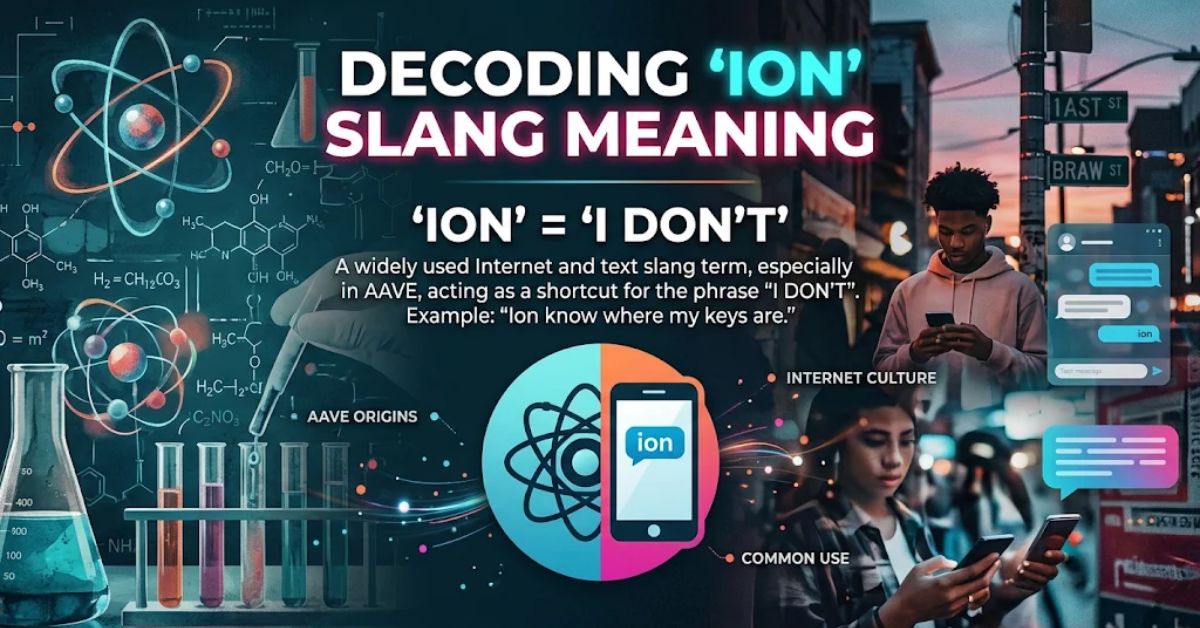
Ever received a message saying IONK and paused because you couldn’t figure out what it meant? You’re not alone. Internet slang changes quickly, and even a short word can leave you scratching your head. IONK is a casual way of saying I don’t know. It comes from the phrase ion know and usually appears in relaxed online conversations. People use it when they’re unsure, confused, or simply don’t have an answer. You might see it in text messages, Snapchat chats, TikTok comments, or group conversations.
Knowing the ion slang meaning makes these everyday messages much easier to understand. Although IONK sounds informal, its meaning is usually simple and clear. It works well when chatting with friends but feels out of place in professional messages. The tone can also change depending on the situation. Let’s look at how people use IONK, what it means in different contexts, and how it compares with similar texting slang.
What Does IONK Mean In Text?
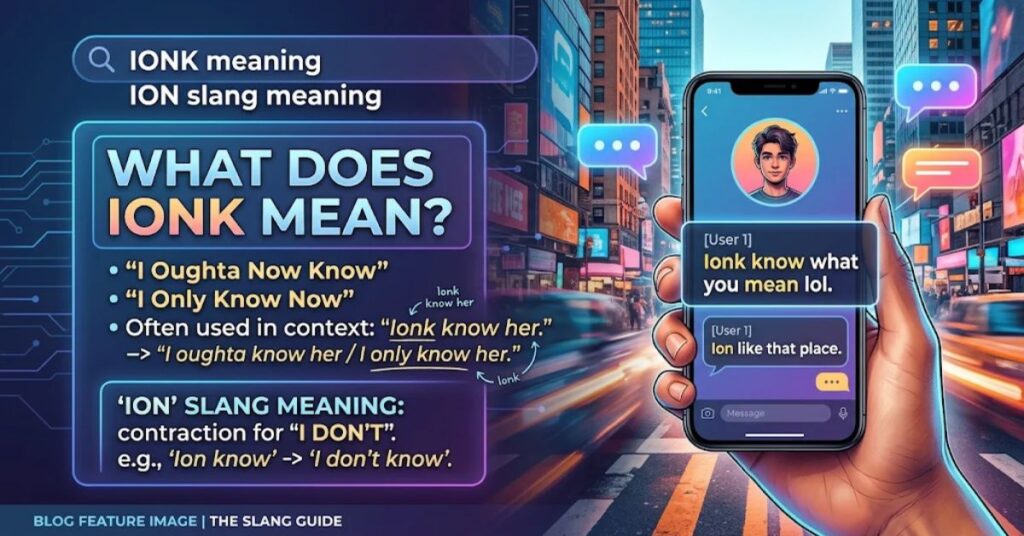
Have you ever received a message saying ionk and wondered what the sender meant? You’re not alone. IONK is casual internet slang that means I don’t know. It comes from the phrase ion know, a shortened way of expressing uncertainty in everyday conversations.
People use this texting slang when they want to answer quickly without typing a complete sentence. It’s similar to saying I dunno or IDK. The spelling reflects how some people pronounce the words during casual speech.
For example:
- IONK: I don’t know.
- Ion know: A casual pronunciation of I don’t know.
- IDK: A widely recognized abbreviation for I don’t know.
The ion slang meaning becomes easier to understand when you recognize its connection to everyday speech. It’s usually a relaxed way to express confusion or uncertainty.
Simple Meaning (In Plain Words)
Let’s make the meaning even simpler. IONK means I don’t know. It’s a casual spelling that people use in text messages and online conversations.
Think of it as a quick digital shrug. Instead of explaining everything, someone can type IONK to show they’re unsure about something.
Here are a few simple examples:
- IONK: I don’t know.
- ionk what to do tonight: I don’t know what to do tonight.
- ionk, ask someone else: I don’t know. Ask someone else.
- ion care: I don’t care.
- ion feel like it: I don’t feel like it.
IONK isn’t a complicated abbreviation with several hidden meanings. It mainly communicates uncertainty in casual conversations.
If someone sends you IONK, they’re usually saying they don’t have an answer. The exact tone depends on your conversation and relationship with that person.
Where Is It Used?
IONK mostly appears in informal digital spaces. People use it when chatting with friends or replying quickly on social media.
You’ll usually encounter this internet slang in places where casual spelling feels natural.
Common places include:
- Text messages: Quick conversations between friends.
- Instagram: Comments, captions, and direct messages.
- Snapchat: Casual replies and disappearing messages.
- Discord: Group chats and gaming conversations.
- TikTok: Comments and casual interactions.
- Twitter/X: Replies and short social posts.
- Group chats: Conversations with friends and your squad.
For example:
Friend: What should we do this weekend?
You: ionk, maybe watch a movie.
You probably won’t see IONK in formal emails or professional Slack messages. It’s better suited to casual conversation than workplace communication.
Why Do People Use It?
People love shortcuts when texting gets busy. IONK makes it easier to express uncertainty without typing a complete sentence.
Several reasons explain why people use this shortened slang:
- Faster typing: It saves thumb work during quick conversations.
- Casual tone: It sounds relaxed rather than overly formal.
- Texting culture: Shortened expressions have become common in internet culture.
- Natural speech: Its spelling reflects casual spoken speech patterns.
- Social connection: Friends often share slang that makes conversations feel familiar.
For example:
Friend: Do you think we’ll have pizza night tomorrow?
You: ionk 😭
This reply communicates uncertainty without sounding overly serious. However, tone and context matter. Punctuation and emojis can change how someone interprets a short response.
IONK isn’t necessarily a sign of laziness. Sometimes people simply prefer texting the way they speak.
Real-Life Examples (With Explanations)
Real conversations make internet slang much easier to understand. Here are some examples showing how people use IONK in everyday messages.
Example 1: Making Plans
Friend: Are we going out tonight?
You: ionk, my parents might need me.
Meaning: You’re unsure whether you can join the plans.
Example 2: Asking for Advice
Friend: What should I wear tomorrow?
You: ionk, maybe your blue jacket.
Meaning: You’re uncertain but still offering a suggestion.
Example 3: Expressing Confusion
Friend: Why is he acting so strange?
You: ionk why he’s doing that 💀
Meaning: You don’t understand his behavior.
Example 4: Giving a Short Reply
Friend: Can you explain what happened?
You: ionk, ask someone else.
Meaning: You don’t know the answer and suggest asking another person.
These examples show how IONK works in different situations. The basic meaning stays the same while the conversational tone changes.
IONK vs Similar Terms
Several texting abbreviations look similar or communicate related ideas. However, they don’t all mean the same thing.
Understanding these differences helps you avoid confusing IONK with other popular internet expressions.
| Term | Meaning | Common use |
| IONK | I don’t know | Expressing uncertainty |
| IDK | I don’t know | General uncertainty |
| ION | I don’t | Starting casual expressions |
| NVM | Never mind | Dropping a conversation topic |
| IDC | I don’t care | Showing indifference |
| FR | For real | Showing agreement or emphasis |
| SMH | Shaking my head | Expressing disappointment |
For example, someone might write ion care to mean I don’t care. Meanwhile, ion like that means I don’t like that.
IONK differs because it expresses not knowing something. IDK carries the same basic meaning but has wider recognition.
When Should You Use It?
IONK works best when you’re chatting with people who understand internet slang. It fits relaxed conversations where perfect grammar isn’t important.
You can comfortably use it in situations like:
- Texting your close friends.
- Replying in casual group chats.
- Talking with your gaming squad.
- Commenting on social media posts.
- Sending informal Snapchat messages.
- Chatting with people who already use similar slang.
However, some situations call for clearer language.
Avoid using IONK when messaging:
- A teacher about schoolwork.
- Your boss about professional responsibilities.
- An unfamiliar professional contact.
- Older relatives who might not recognize the expression.
- Someone who expects formal writing.
For example, writing IONK in a professional email might confuse the recipient.
The best approach is simple: read the room and match your audience. Use IONK when the conversation feels relaxed. Choose I don’t know when clarity matters more.
Common Misunderstandings
IONK might look confusing when you encounter it for the first time. Its unusual spelling can lead to several misunderstandings.
Here are some common mistakes worth avoiding:
- Thinking it’s a typo: IONK can be intentional slang rather than a fat-finger mistake.
- Confusing ION with IONK: ION generally means I don’t. IONK expresses I don’t know.
- Assuming it’s rude: The expression usually communicates uncertainty rather than disrespect.
- Thinking it’s a formal abbreviation: IONK belongs mainly to informal texting culture.
- Assuming everyone understands it: Familiarity can vary between age groups and online communities.
Its connection with spoken speech patterns also deserves attention. The phrase ion know reflects a casual pronunciation of I don’t know.
African American Vernacular English (AAVE) has influenced many expressions in modern internet slang. However, the precise origin and development of IONK aren’t firmly established.
Remember that context matters. A short response might sound dismissive in one conversation but completely normal in another.
Pro Tips For Using IONK Correctly
Want to use IONK without making your messages confusing? A few simple habits can help you use it naturally.
- Keep it casual: Use IONK with friends rather than in formal emails.
- Understand the context: Make sure the other person recognizes texting slang.
- Don’t overuse it: Repeating the same abbreviation can make conversations feel dull.
- Use emojis naturally: A shrug or laughing emoji can make your tone clearer.
- Match lowercase styling: Casual lowercase texting often fits the expression.
- Choose clear alternatives: Use IDK when someone might not understand IONK.
- Avoid unnecessary explanations: Keep quick replies short and natural.
For example:
Friend: Do you know when the movie starts?
You: ionk tbh, check the cinema website.
This sounds relaxed and fits a casual conversation.
However, remember that slang changes across communities and generations. What sounds natural to your friends might confuse a teacher, boss, or professional contact. The trick is knowing when to use it and when a clearer expression works better.
Final Thoughts
Understanding the ion slang meaning makes texting easier and less confusing. IONK is a casual way to say I don’t know. People often use it when they feel unsure or have no clear answer. The ion slang meaning also depends on the conversation and tone. You may see it in messages, social media comments, and group chats. It works best when talking with friends or people who understand internet slang.
Now that you know the ion slang meaning, you can recognize it without confusion. You can also use IONK when a quick, relaxed reply feels natural. Just remember that it may not suit work messages, emails, or formal conversations. If someone sends you IONK, consider the context before replying. Simple slang can make online chats feel more natural. Knowing its meaning helps you keep up with everyday texting.
FAQ Section
What Does IONK Mean in Text Messages?
IONK means I don’t know. The ion slang meaning describes a casual way to express uncertainty in online conversations.
Is IONK the Same as IDK?
Yes, both mean I don’t know. However, IONK sounds more casual and reflects informal texting language.
Is IONK Rude or Disrespectful?
No, IONK usually isn’t rude. Its tone depends on the conversation, punctuation, and relationship between the people chatting.
Where Do People Commonly Use IONK?
People use IONK in text messages, Snapchat, TikTok comments, Instagram DMs, Discord, and casual group chats.
How Should You Reply When Someone Says IONK?
You can ask for their opinion, suggest an option, or simply move on. The ion slang meaning shows uncertainty.
